
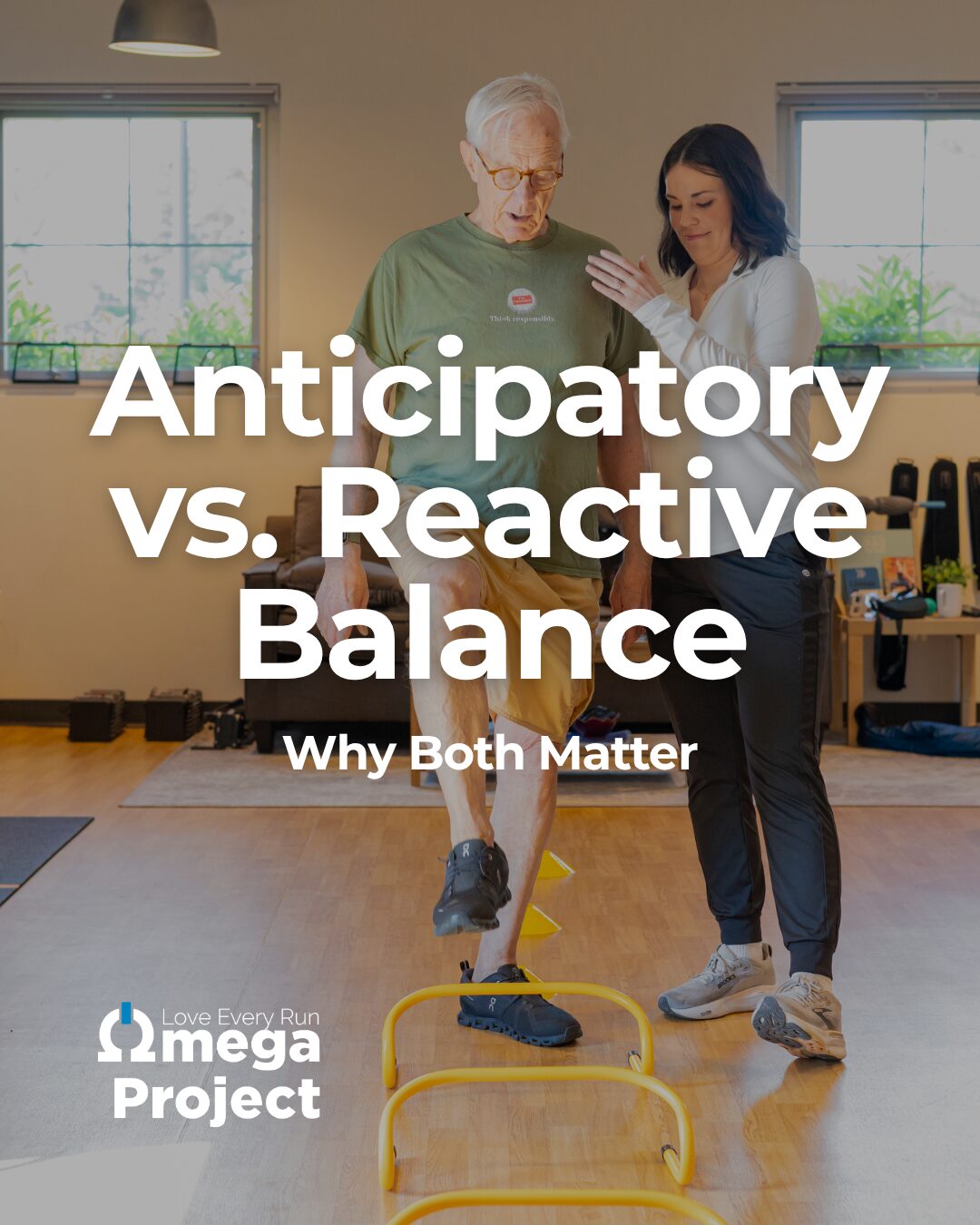
When most people think about balance, they think about not falling. But balance is much more than standing on one leg—it’s your body’s ability to prepare for movement and respond when the unexpected happens.
These two abilities are called anticipatory balance and reactive balance, and both are essential whether you’re an athlete looking to improve performance or an older adult wanting to stay active and independent.
What Is Anticipatory Balance?
Anticipatory balance is your body’s ability to prepare for movement before it happens. Your brain and muscles work together to make subtle adjustments that keep you stable during planned movements.
Examples include:
- Stepping onto a curb
- Standing up from a chair
- Reaching overhead
- Changing direction while running or playing sports
For athletes, strong anticipatory balance improves movement efficiency, agility, and body control. For older adults, it helps make everyday tasks safer and more confident.
What Is Reactive Balance?
Reactive balance is your body’s ability to recover after an unexpected loss of balance. It’s what helps you catch yourself if you trip, slip, or get bumped.
Examples include:
- Recovering after tripping on uneven ground
- Regaining balance after slipping
- Catching yourself after landing awkwardly during sports
Athletes rely on reactive balance to quickly adapt during competition and reduce injury risk, while older adults depend on it to prevent falls during daily activities.
Why Train Both?
Your body uses anticipatory and reactive balance together every day.
Improving both can lead to:
- Better stability and coordination
- Improved athletic performance
- Faster reactions to unexpected movements
- Reduced risk of falls and injuries
- Greater confidence with movement
How Physical Therapy Can Help
A physical therapist can identify which aspects of your balance need improvement and create a personalized plan based on your goals.
Whether you’re a runner hoping to improve agility, an athlete returning from injury, or someone who wants to stay steady and independent as you age, balance training can help you move more efficiently and confidently.
The Takeaway
Balance isn’t just about standing still—it’s about preparing for movement and responding when things don’t go as planned.
By training both anticipatory balance and reactive balance, you can improve performance, reduce injury and fall risk, and feel more confident in everything from sports to everyday life. No matter your age or activity level, better balance is something you can build.
Omega Project PT is located in Wilmington, Delaware, serving athletes across the greater Wilmington area, including Newark, Hockessin, and surrounding communities.
